The Fitting Room Experience
Enhancing the in-store retail experience for customers and employees through retail technology.
Project Overview
For my Innovation Through Design Thinking class, we were tasked with identifying a problem space to solve. The purpose of this assignment was to go through the design thinking process to research, design, and prototype an end-to-end product with a feasible and tested solution. My partner and I identified fitting rooms in retail stores to be an infamous problem for customers and employees a like.
Project Type
Team
Academic
Adaeze Ezekwerre
Role
Timeline
UX Designer and Researcher
3 months
1 Designer
Problem and Opportunity
Customers spend about 1/3 of their time in the fitting room when shopping in retail stores
The fitting room can be a stressful place for shoppers and employees alike, serving as a pivotal point for in-store purchasing decisions. Yet, it often lacks comfort, order, and security for customers, placing employees under pressure to offer a positive shopping experience while maintaining the fitting room and managing to return clothes back to the retail floor and stockroom.
So, we are presented with this design challenge: How might we mediate employees and customers frustrations with how disorganized and disruptive fitting rooms can be in retail stores?
Final Designs
We decided to overhaul the current fitting room experience and create a new standardized practice and procedure that benefited both user groups and the business. Instead of incremental fixes, it presents a holistic solution, reimagining the way clothing moves throughout a store altogether.
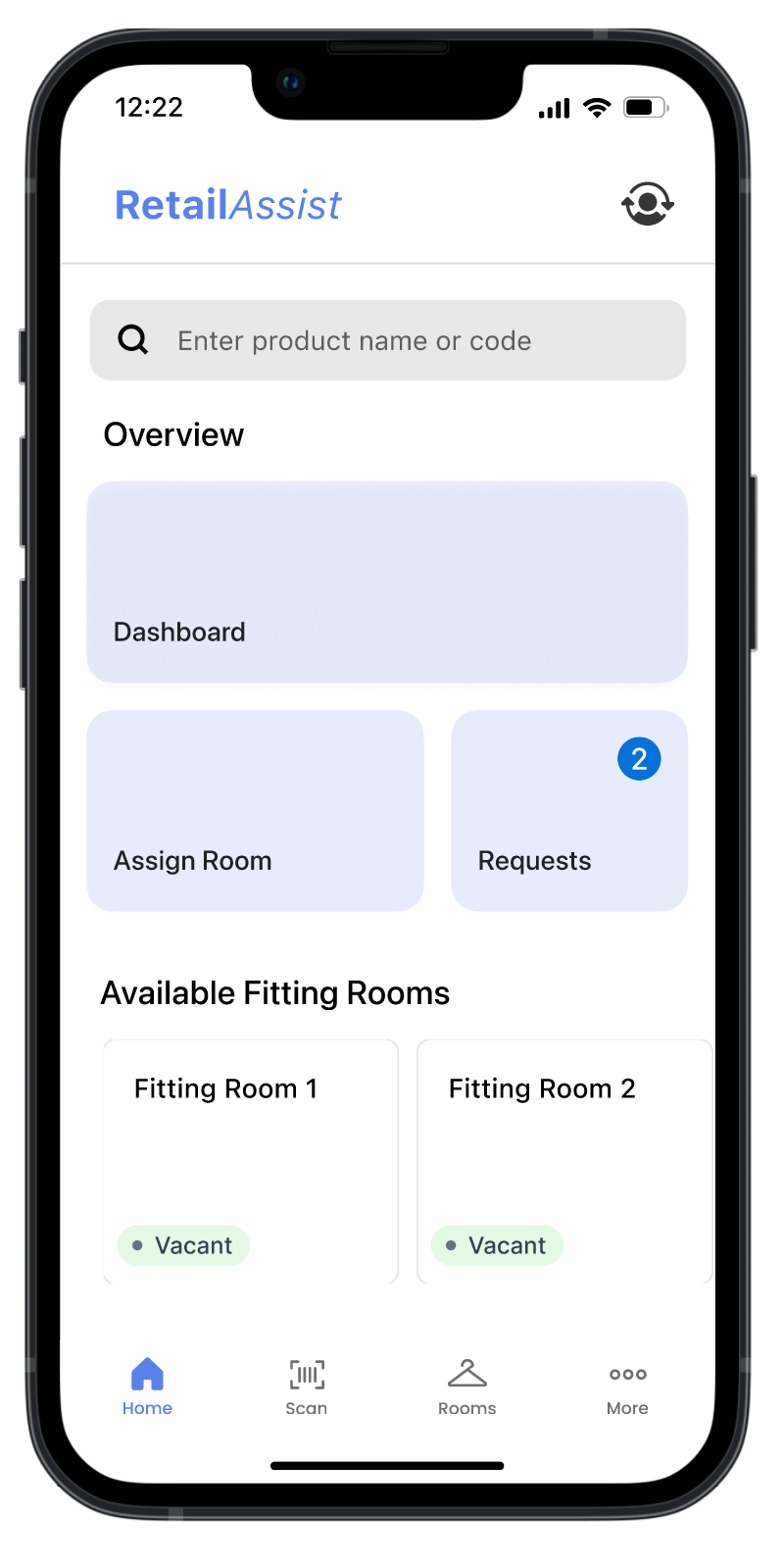
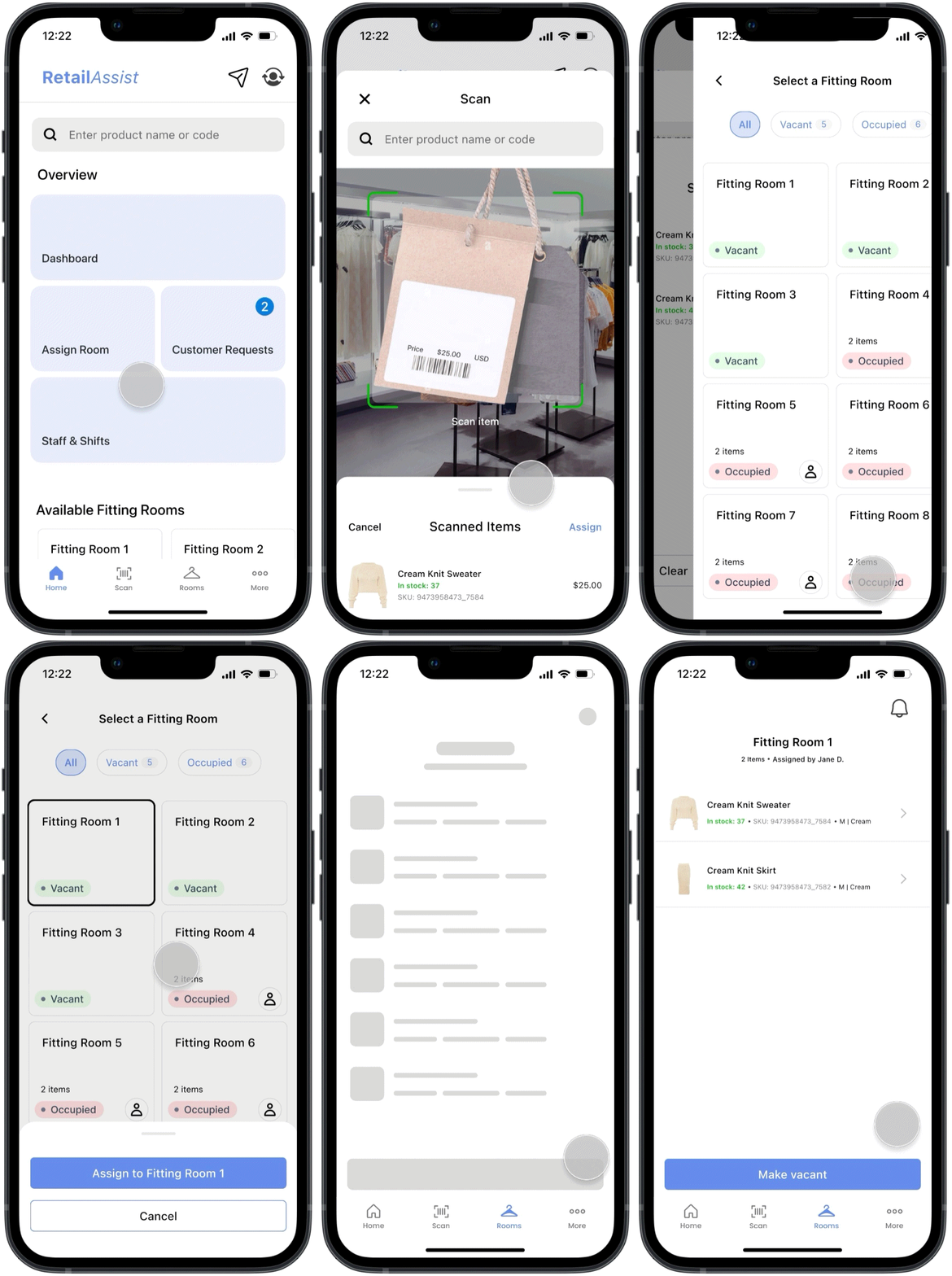
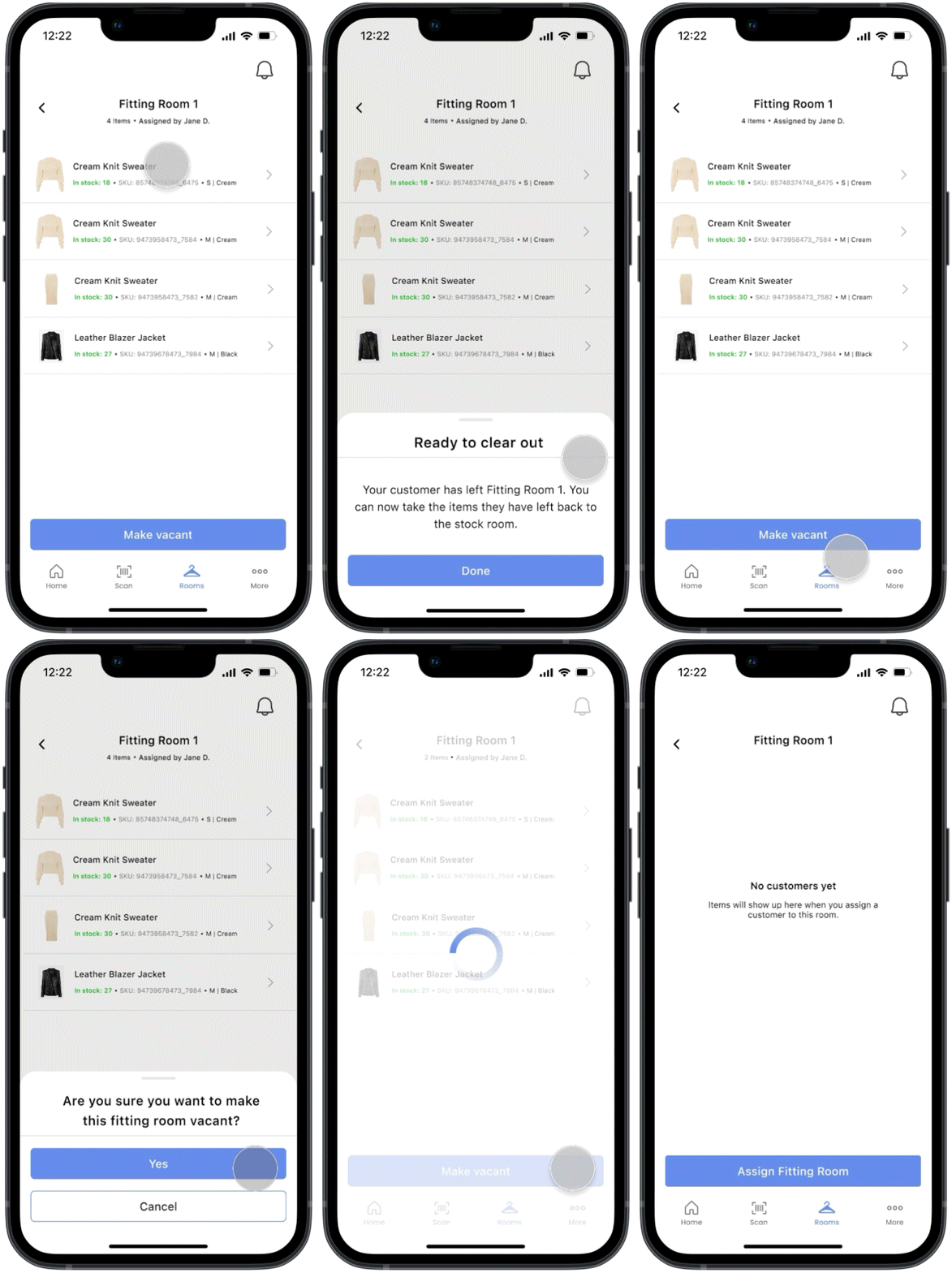
Scanning items allows employees to quickly identify which fitting rooms are occupied, streamlining the process of assisting customers and managing fitting room turnover efficiently.
Streamline the flow of customers to fitting rooms
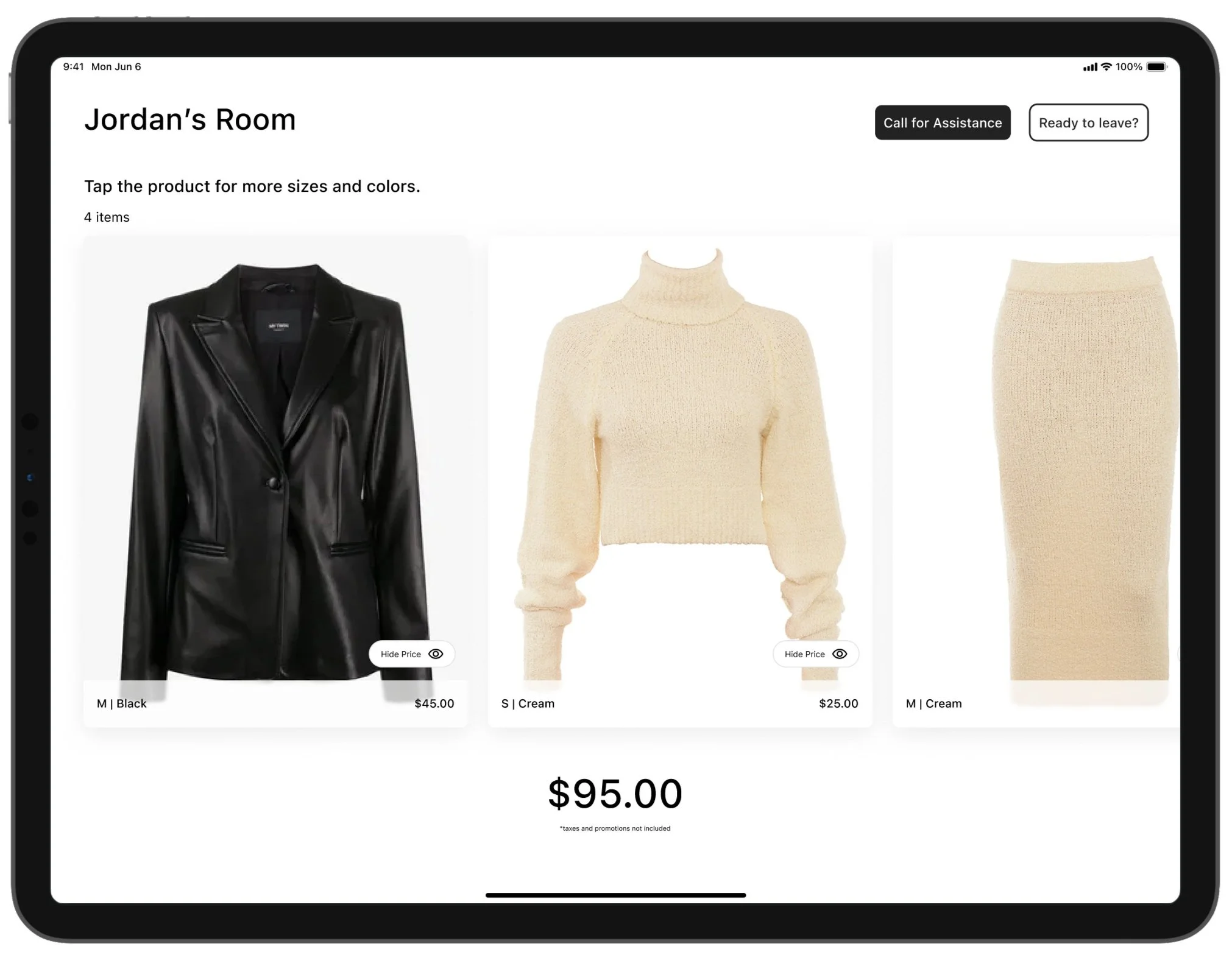
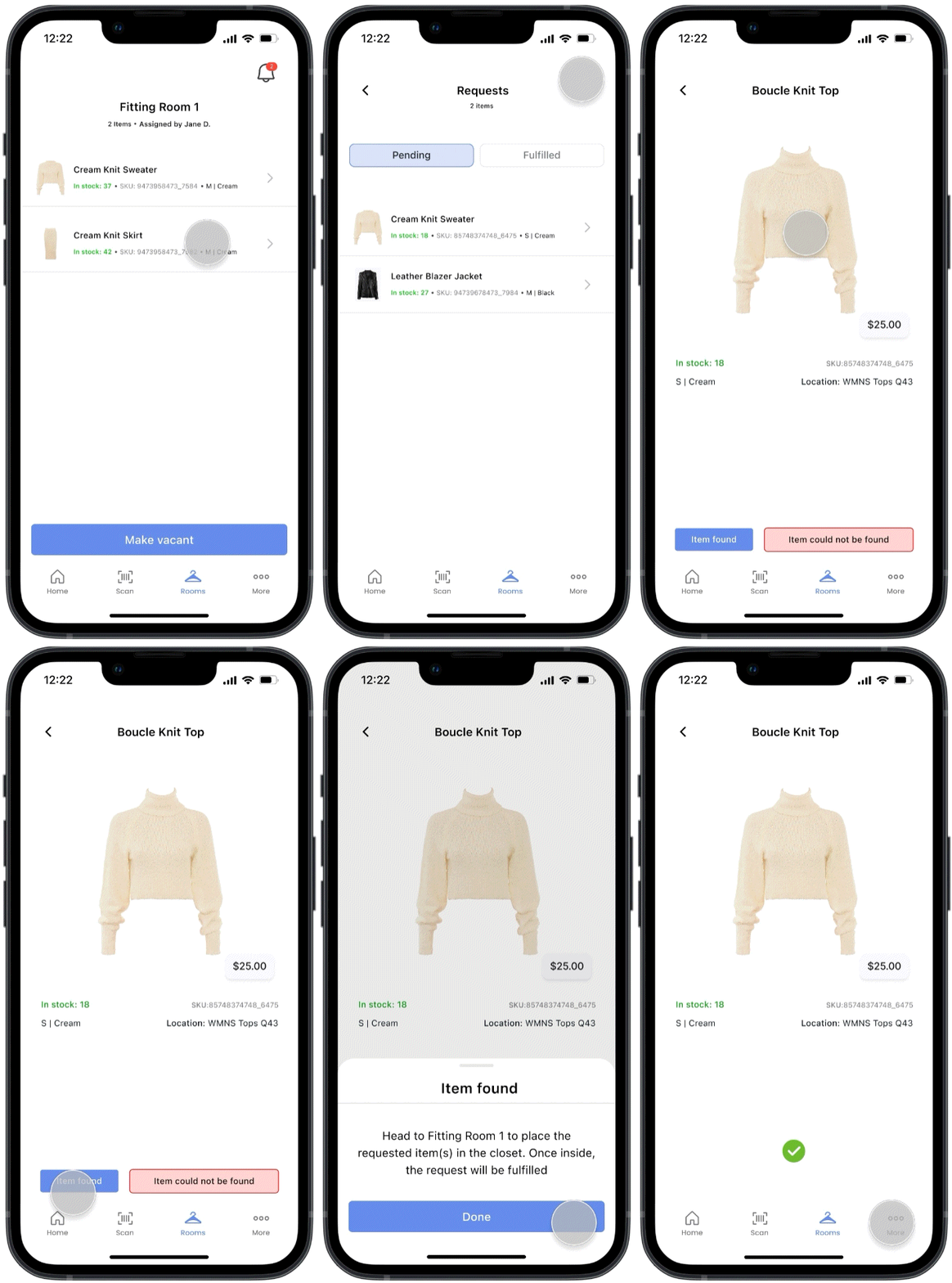
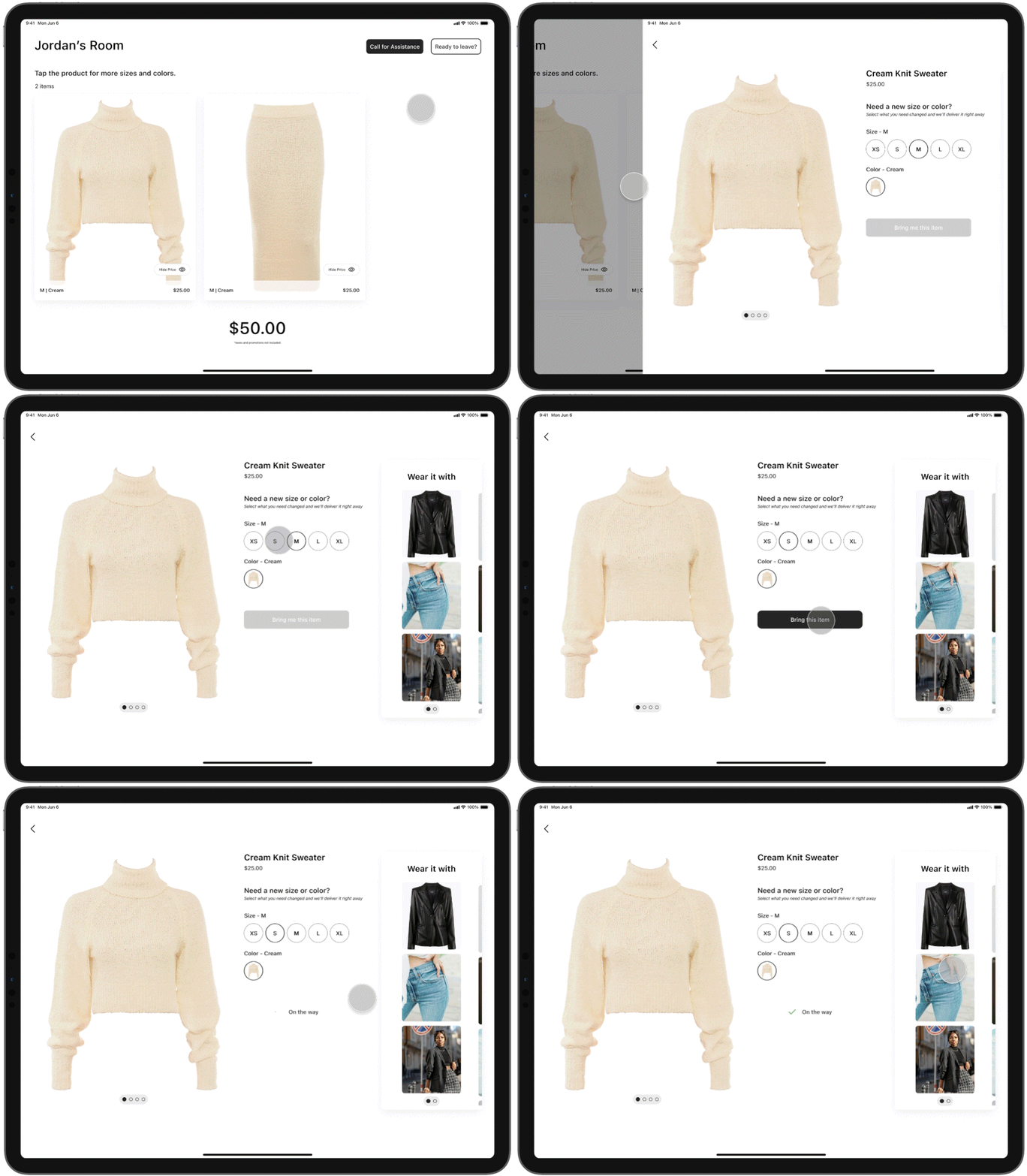
Customers can find a new size and make requests without leaving their fitting room. Employees can fulfill requests and control the flow of clothes in the fitting room.
Balance interaction with employees and customers
With a showroom inspired sales floor, employees can simply take the clothes left over in the fitting room back to stock. This eliminates the need for back-and-forth movement of items between stock and sales floor, enhancing efficiency.
Eliminate go-backs
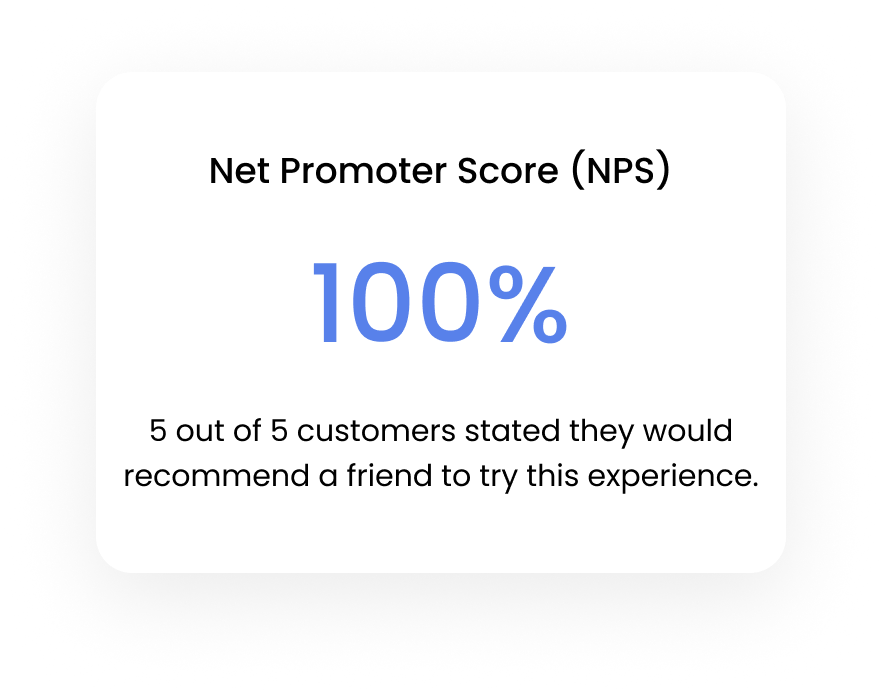
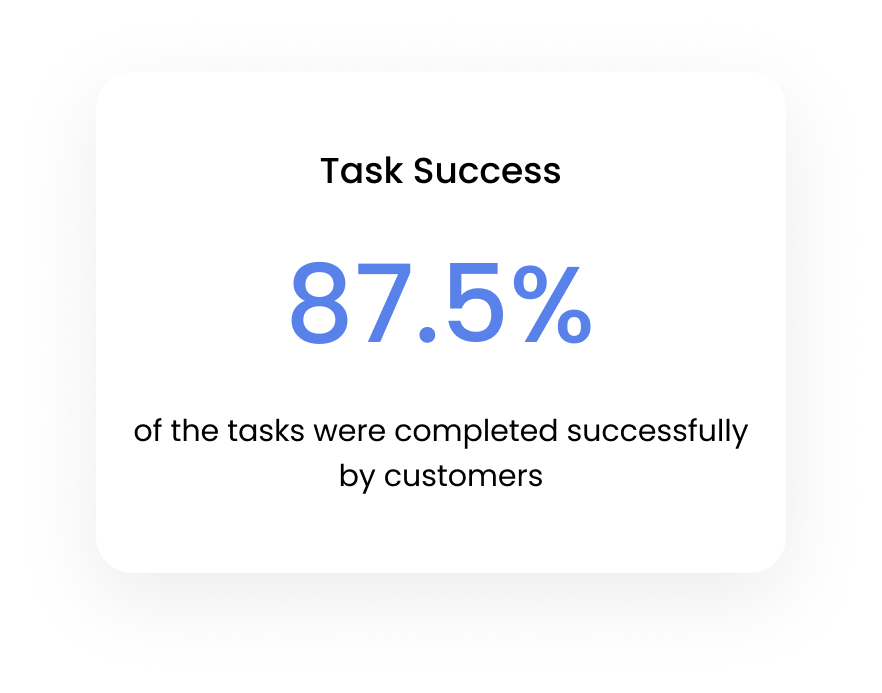
Success Metrics
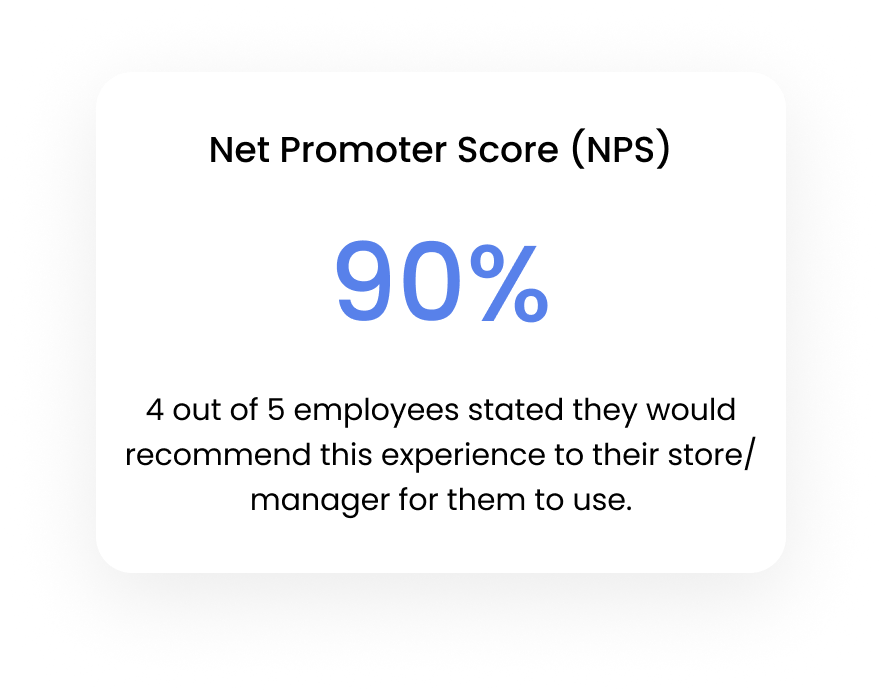
Employees
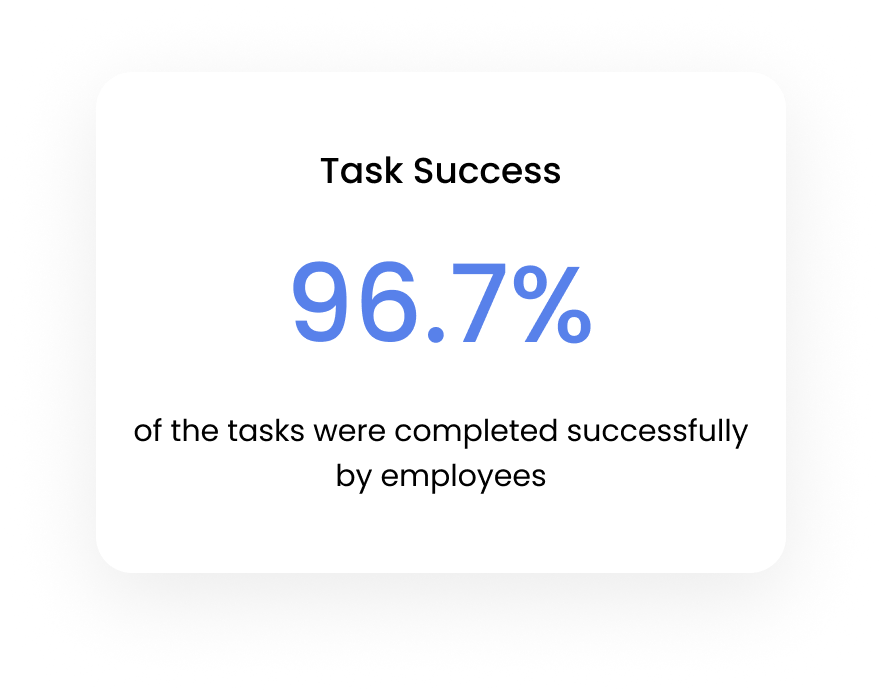
Customers
Generative Research
My partner and I explored fitting rooms, studying the process and environment. We visited various stores, noted details, and interviewed eight individuals (3 employees, 5 customers) to get a better understanding of the problem space for these two user groups. Common themes emerged, including concerns about cleanliness, privacy, and garment placement confusion. This is where their pain points and frustrations intersect.
Field Study and Direct Observations
Exploring various retail stores’ fitting room layouts and processes through the customer lens




Insights

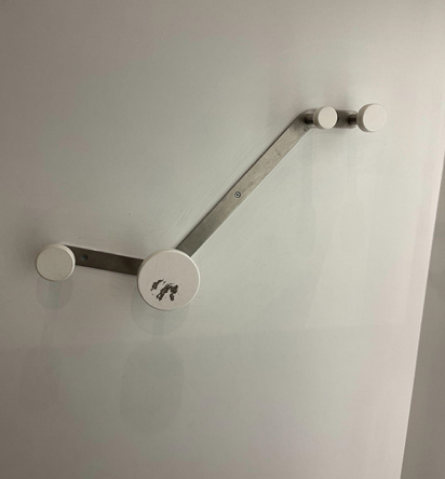
Little to no space and storage to move around and try on clothes. Additionally, there were only a few ADA-compliant fitting rooms available, limiting inclusivity.

Limited space and storage
Employee-Customer Interaction

Tension emerged between customers desiring assistance and those seeking privacy in fitting rooms. We observed varied inclinations among customers and employees, some welcoming collaboration while others lacked readiness or training for it.
The majority of fitting rooms we visited still had clothes from previous customers, and the clothing racks outside were overflowing. Sales associates appeared to be struggling with the high volume of clothing to manage.

Disorganization
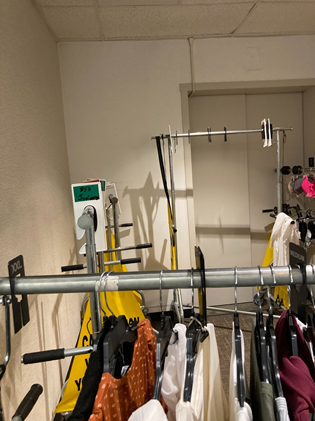
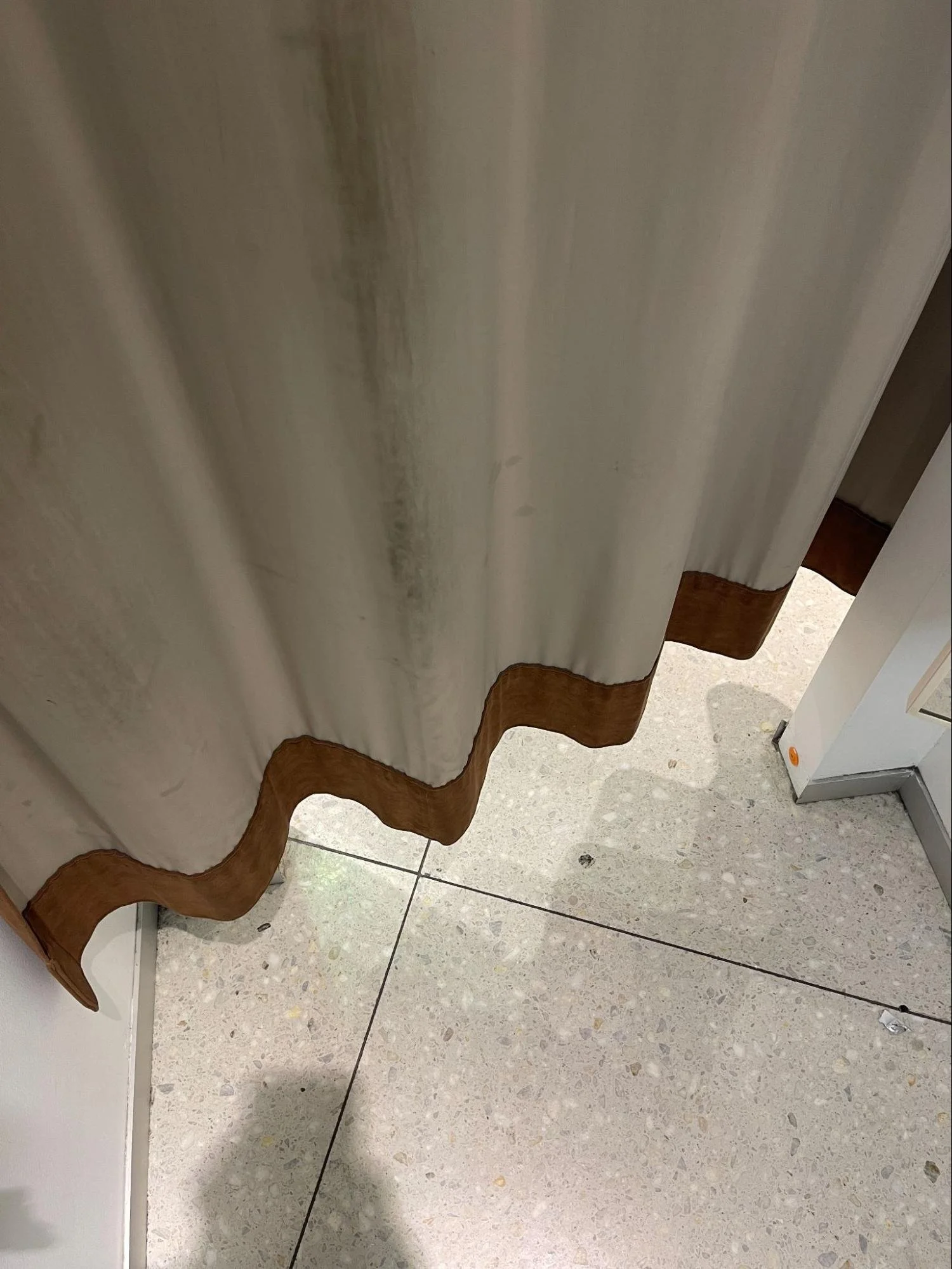
At one store, fitting rooms were fully covered without gaps around doors, while others had either gaps around doors or used curtains. Curtains caused confusion among customers and staff, leading to unintended intrusions on people changing.

Privacy concerns
User Interviews
Understanding customer and employee experiences
I interviewed three employees and five customers with diverse backgrounds to gather a wide range of perspectives. From these conversations, I identified four common themes that aligned with our field study observations.
Insights:
Customers are often confused on where to place their items, both in the fitting room and upon exiting the fitting room

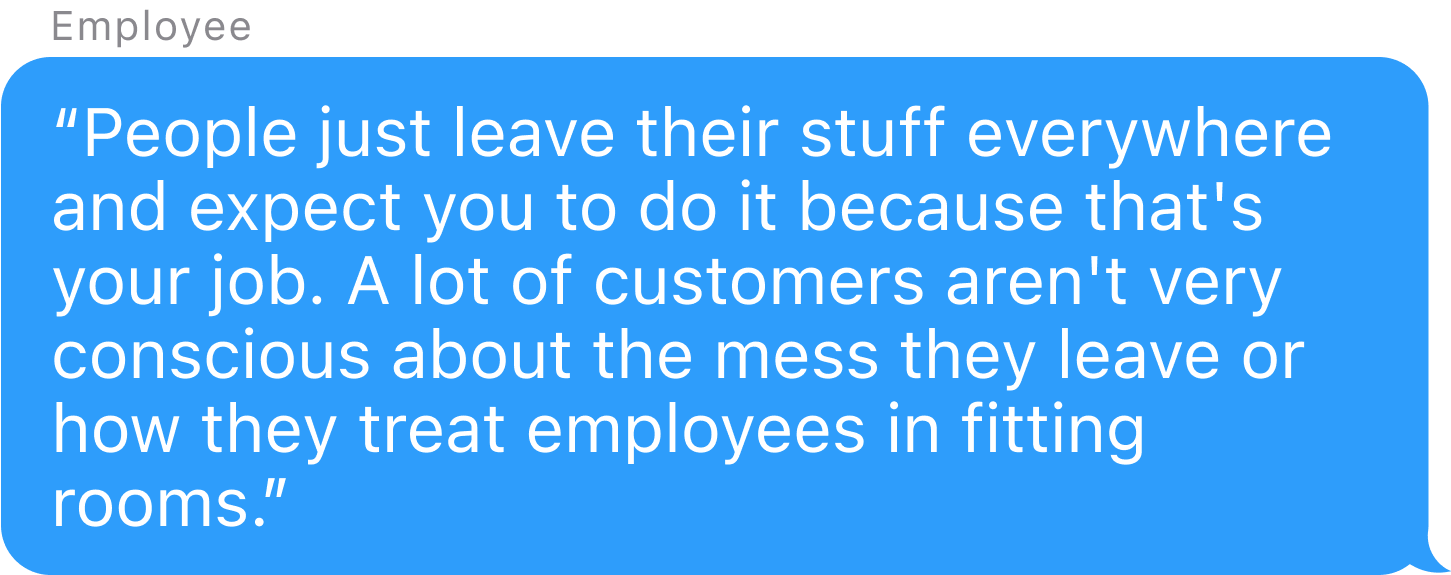
Employees face conflicts with customers, making their jobs difficult by creating messes and not putting items back correctly.

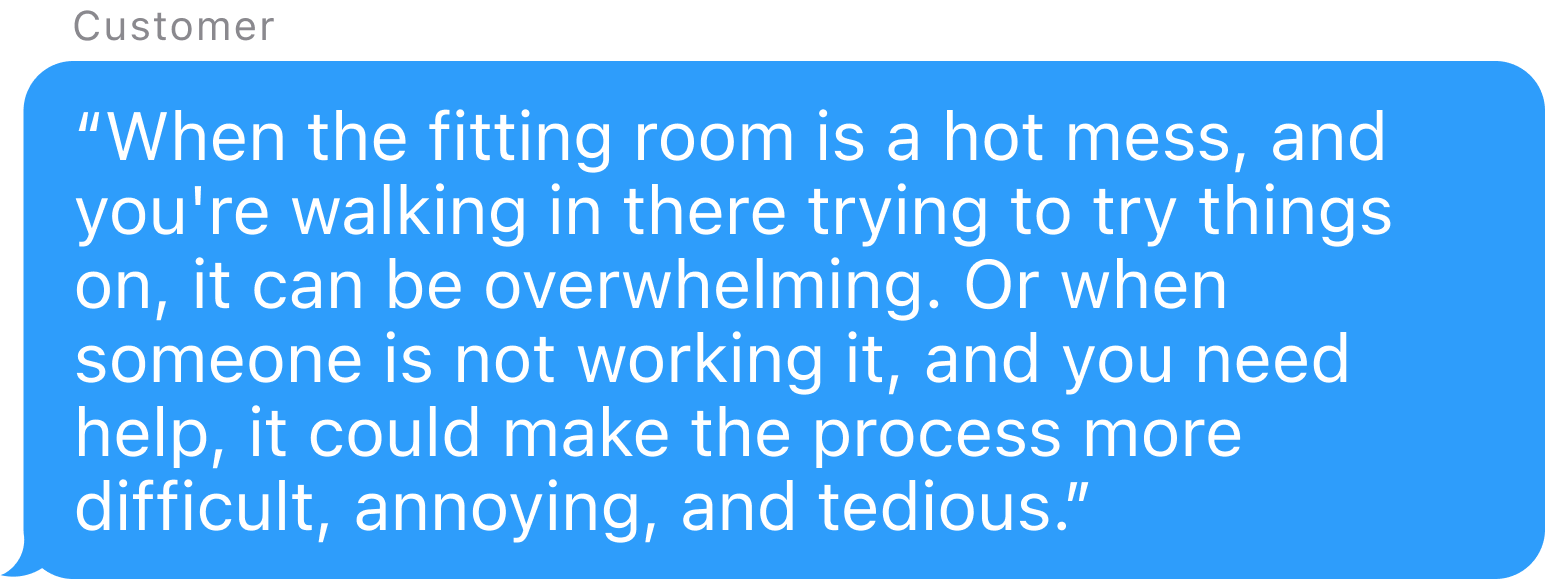
Employees and customers experience a lot of frustration with the state of fitting rooms. Employees struggle to keep up with the ebb and flow of clothes being brought in and customers dislike walking into fitting rooms that have piles of clothes and racks all over the place.

There are some concerns for privacy with customers and employees possibly walking in while the fitting room is occupied.

Current-State Customer Journey Map + Service Blueprint
Using the the insights I gathered from our field study and interviews, I created a current-state journey map to help visualize the experience customers have when entering a store to try on clothes. I also created a service blueprint to see where in the customers journey will employee interactions be vital to determine the best solution for both users.
Solutions
After listening to our users and taking into account the notes we took on our field study, we decided that redesigning the retail fitting room experience & process and implementing retail technology will enhance customer shopping by streamlining the process and reducing employee workload. This effort may also boost sales and decrease returns, as customers can try on clothes and make informed buying decisions in-store with greater confidence.
Create a fitting room app enabling customers to scan and organize items, receive guidance on placement, and request assistance or additional items without leaving the fitting room.
Customer Facing App
Develop a fitting room management app for sales associates, allowing them to scan items and assign customers to fitting rooms, real-time status updates, notifications for customer assistance, and a tracking system for managing items.
Employee Facing App
Implement a system that indicates when a fitting room is occupied and provide full length doors and rooms with no gaps.
Privacy Measures
To address employee concerns about disorderly fitting rooms and complicated go-back processes, we implemented a streamlined retail showroom-inspired system, minimizing back-and-forth movement between stock and the sales floor, allowing only purchased items to leave the fitting room.
Showroom sales floor

Two-way closet
Introduce a two-closet system in fitting rooms, enhancing organization, improving customer decision-making and streamlining employee processes.
Design Decisions + Iterations
Low-fidelity wireframes
I wanted to make sure the layout and designs for both applications were simple and intuitive to use for my user groups. I was intentional on using an ample amount of white space and minimalistic colors in my designs to limit cognitive overload while they are working and shopping in a somewhat stressful and overwhelming environment.
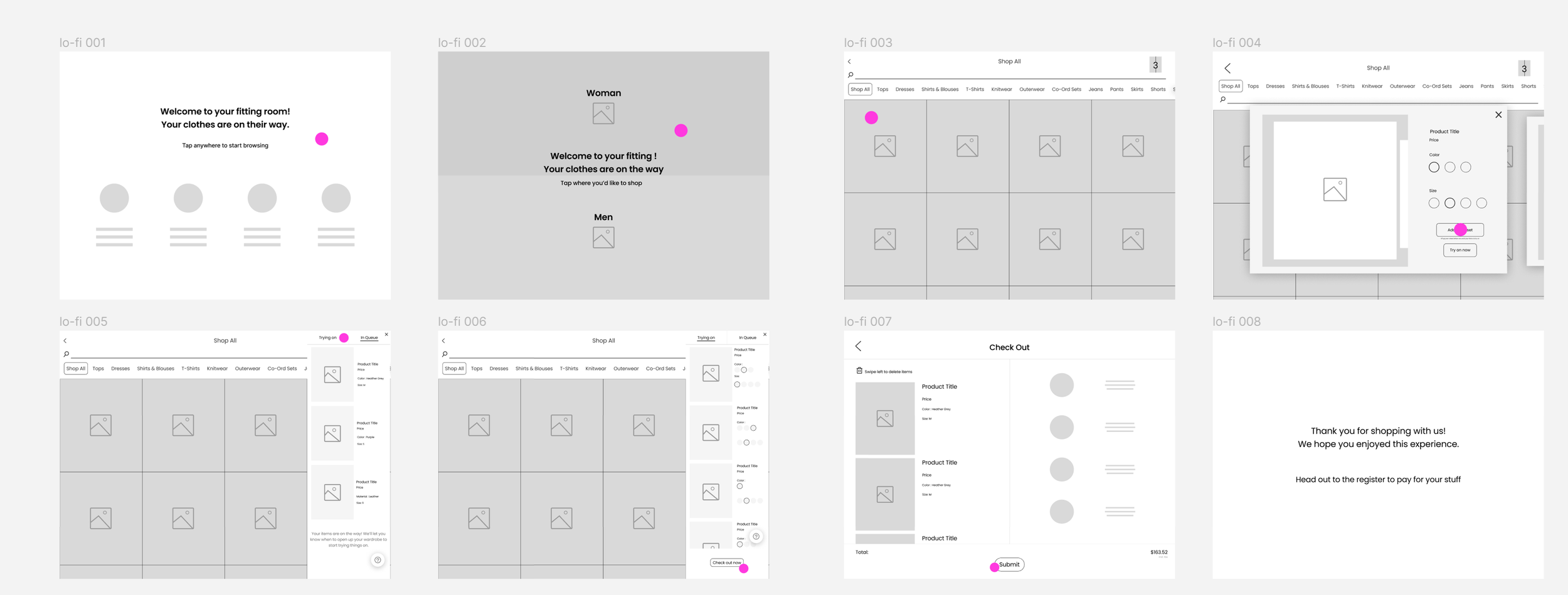
Customer Facing App - Iteration 1
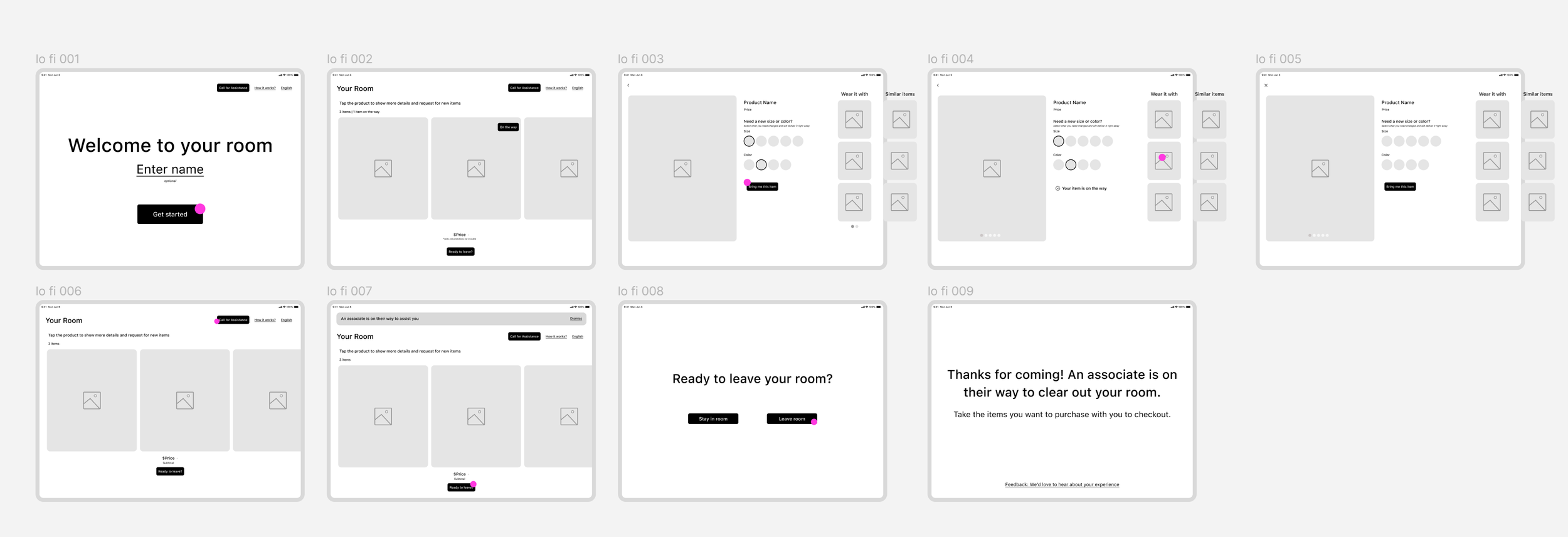
Customer Facing App - Iteration 2
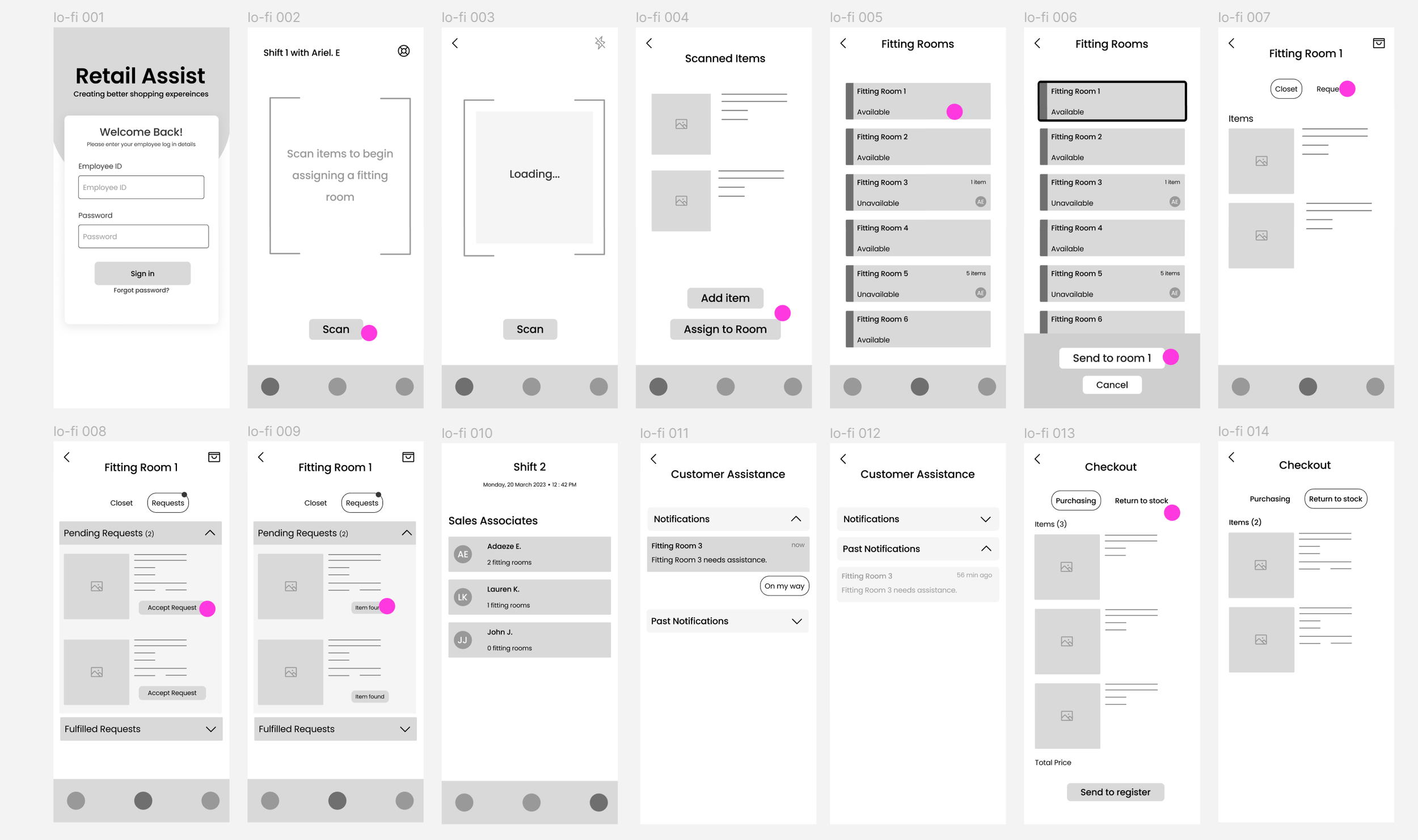
Employee Facing App - Iteration 1
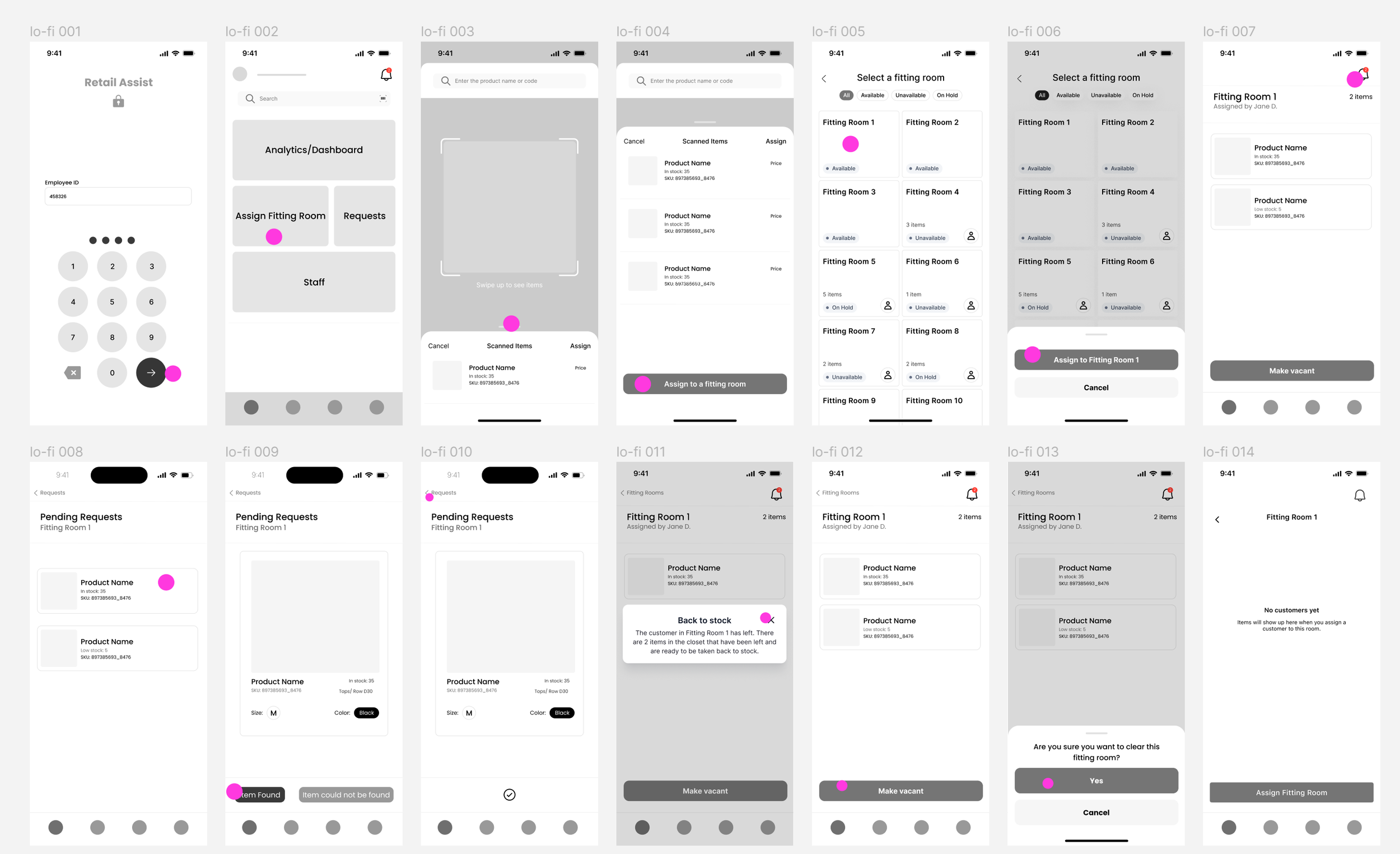
Employee Facing App - Iteration 2
Homepage layout for customers
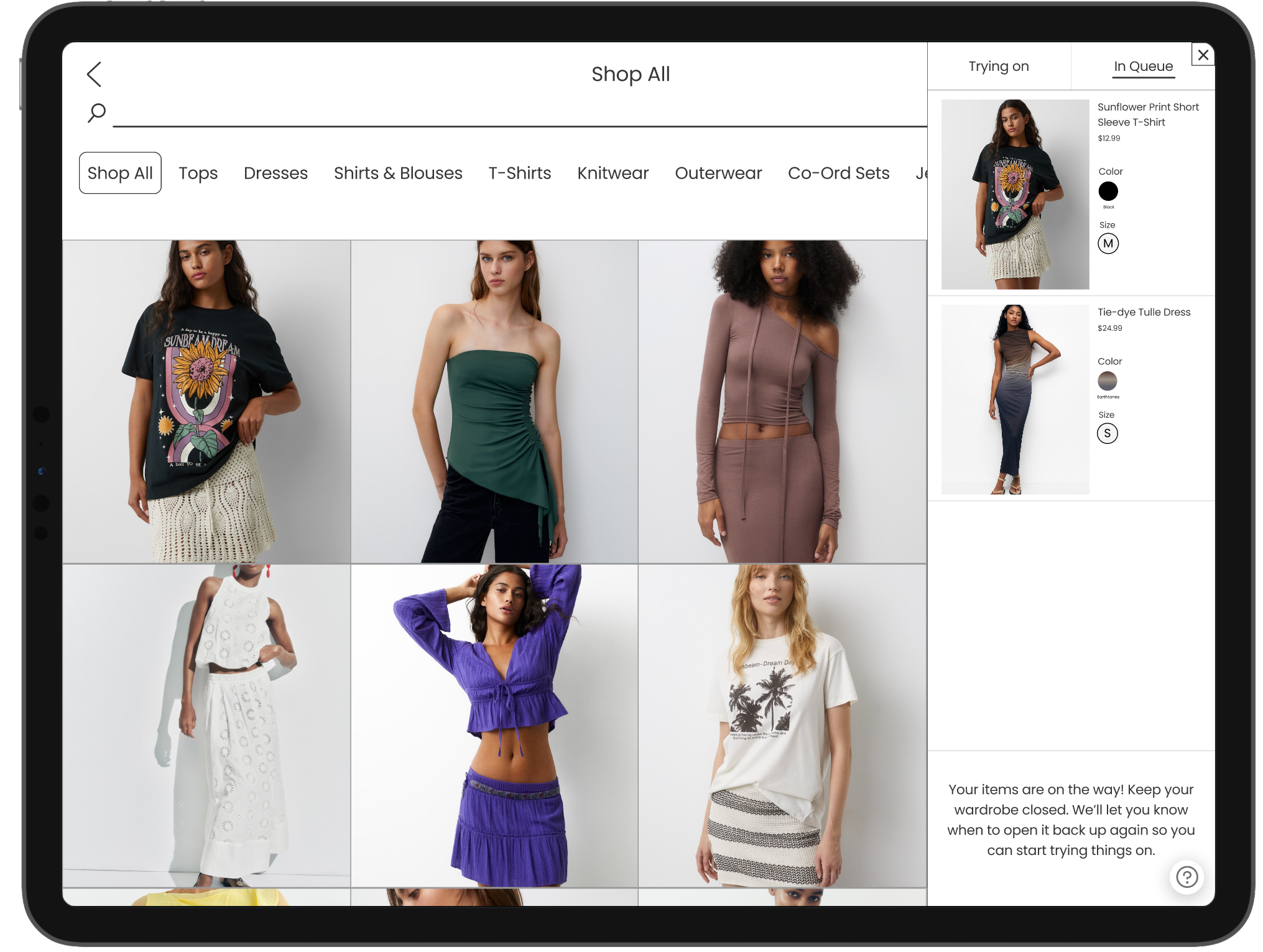
First Iteration
Initially, I wanted to leverage existing mental models using Jakob’s Law buy including the store's product catalog, similar to that of a retail stores website or app, to make it more intuitive and user-friendly. However, after testing the app with users, I discovered that they were overwhelmed by the number of clothing items presented to them, making them feel like they were shopping online instead of trying on clothes in-store.

Final Design
The homepage was revamped to show only the user's closet items to reduce cognitive overload. In order to still provide a way to allow customers to shop while they are in the fitting room, clicking on an item reveals similar and complementary clothing items to the ones they have in their closet.
Scanning items and assigning them to fitting rooms
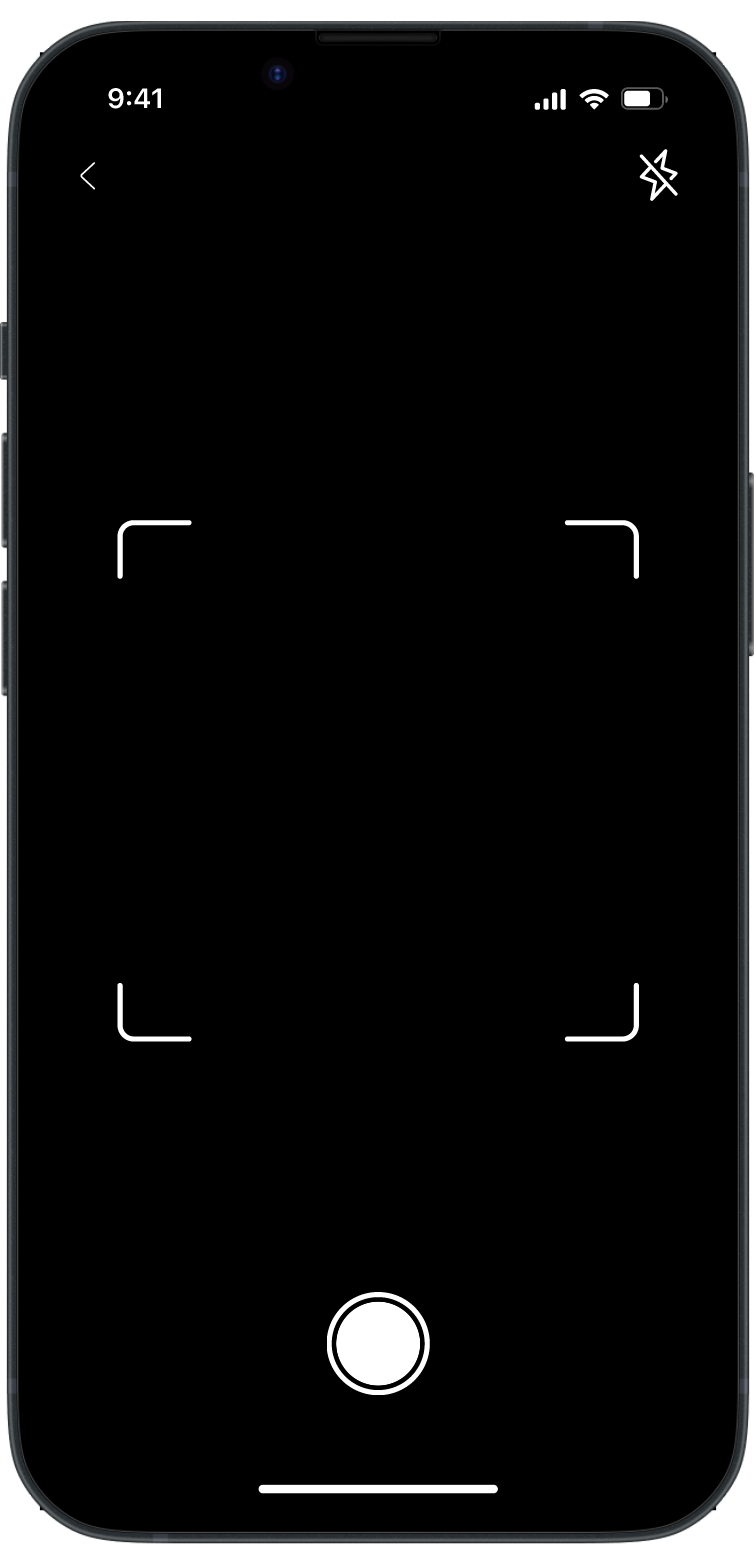
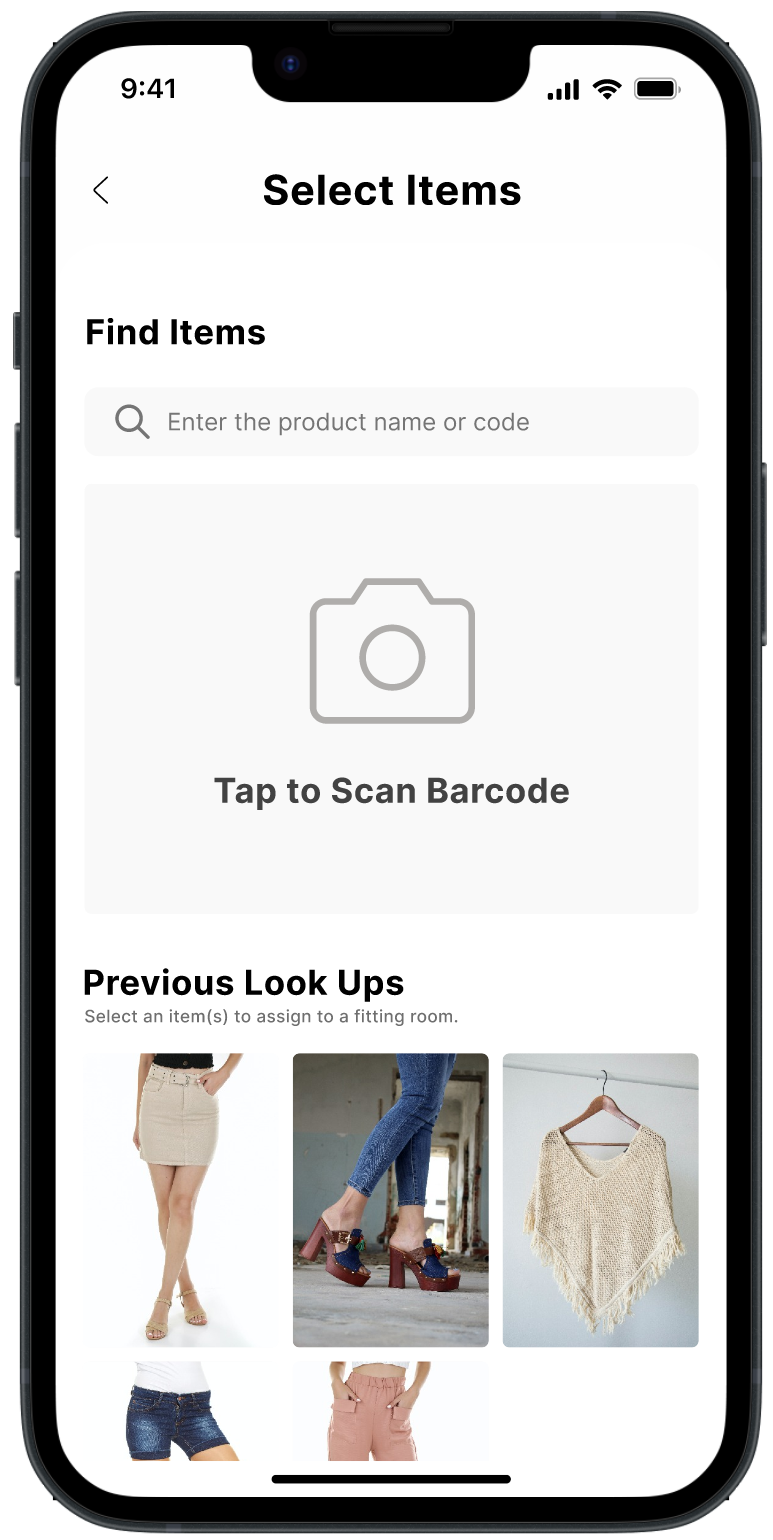
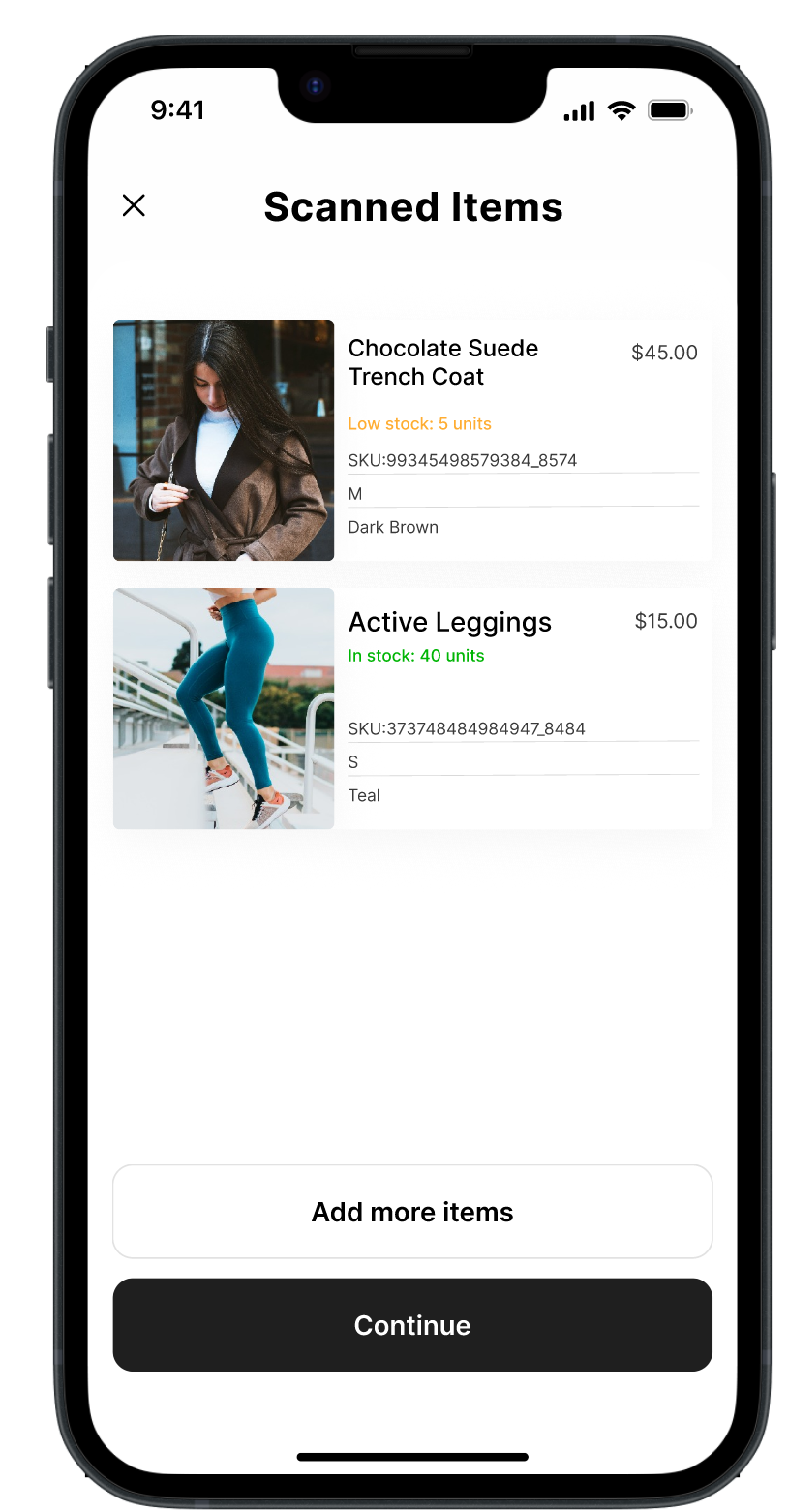
First Iteration
This first iteration had an interaction cost that required employees to go through 3 touches to assign customers to a fitting room and an additional touch to scan a new item.
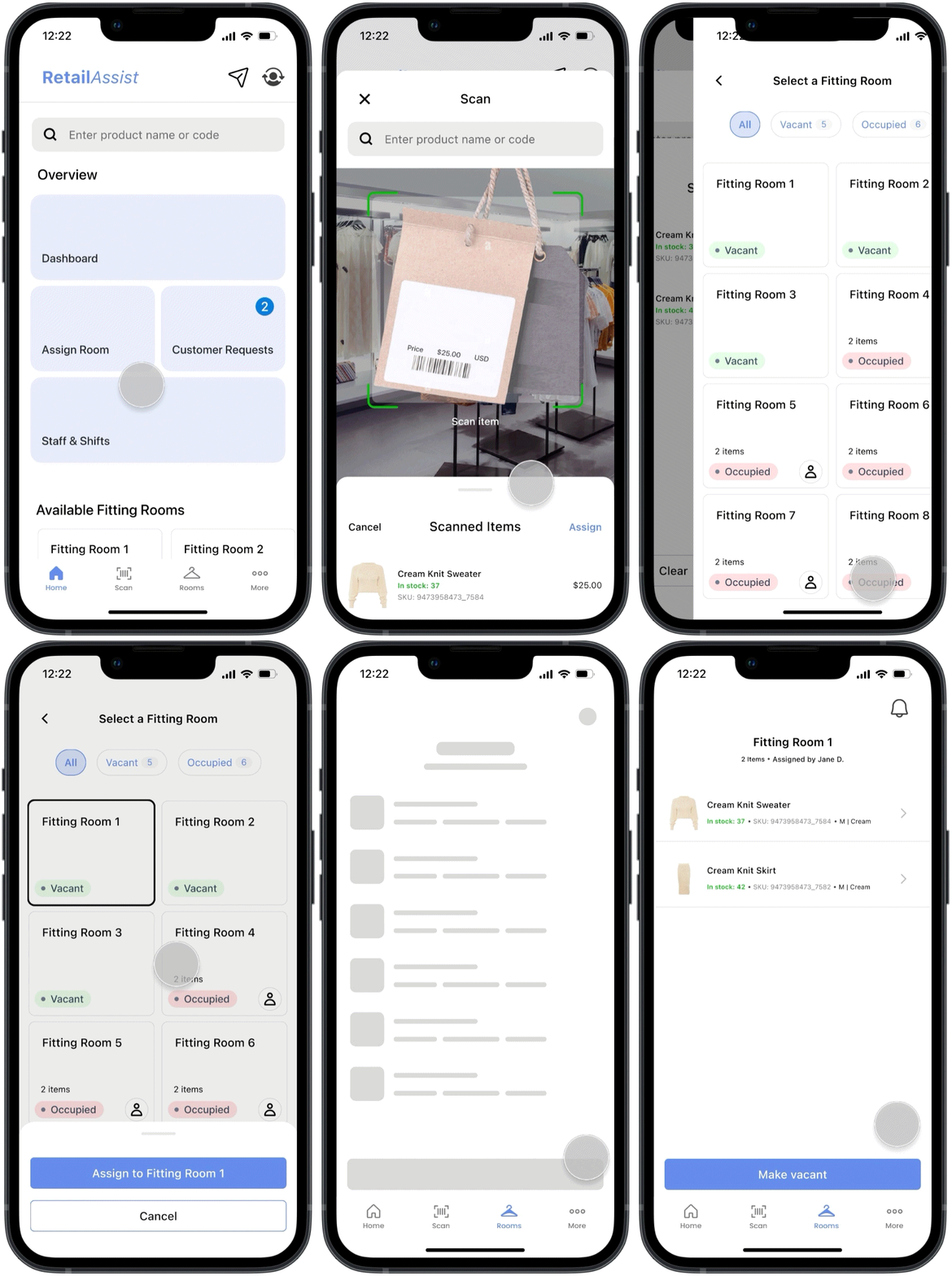
Final Design
I minimized the interaction cost by combining the scanner and scanned items into one screen and eliminating the button for the scanner. This made their primary action of assigning a fitting more streamlined and intuitive.
Key Takeaways
Not everything you plan out will be the final product
Initially, I had several concept ideas that I thought would make these applications even more successful. However, due to time constraints and limited technical abilities, those initiatives just weren’t possible. Creating an MVP helped me stay in scope of the project. If a product like this were to be launched, ongoing testing would be made and implementing those features, as well as others we get from findings and insights, can gradually phase into this new fitting room experience.
Embrace mistakes as learning opportunites
From identifying errors in my UI to discovering underlying UX issues within my application, I'm appreciative of consistently seeking input from both my peers and conducting usability tests. Ultimately, I persisted in optimizing the applications to the best of my abilities, ensuring that my own thought processes didn't hinder my willingness to scrutinize whether my choices genuinely served the user's needs.