

Standout
Facilitating meaningful artist and fan connections through tiered fan engagement opportunities
Project Type
Hackathon
Team
1 UX designer
1 UX researcher
1 Data engineer
1 Data analyst
Role
Researched and designed the platform
Timeline
3 days
Measure of Music
Measure of Music is a 3 day conference with a goal of increasing the visibility of data in music, increase the accessibility of tech for minorities, and help build confidence and exposure for those looking to get into the space. In addition to the conference, my team and I spent the weekend working on a data-related project with API’s and data that was provided to us by the sponsors.
Problem Statement
A common challenge for artists is establishing strong relationships with their fans and generating revenue from them, as they struggle to identify and categorize them across different platforms. On the other hand, music enthusiasts find it difficult to engage in meaningful interactions with their favorite artists and feel appreciated for their loyalty, especially as superfans. How might we address these issues by facilitating meaningful connections between artist and fan?
Full case study coming soon
In the meantime, you can read the high-level overview of our work below. This case study will provide a more comprehensive understanding of our work once it's complete
Timeline
Our primary constraint while working on this project was time. We had 3 days to work on the project and 5 min to present our work, which meant we needed to be both fast and efficient. To tackle the challenge, we had to be scrappy and resourceful while dealing with the ambiguity of it all.
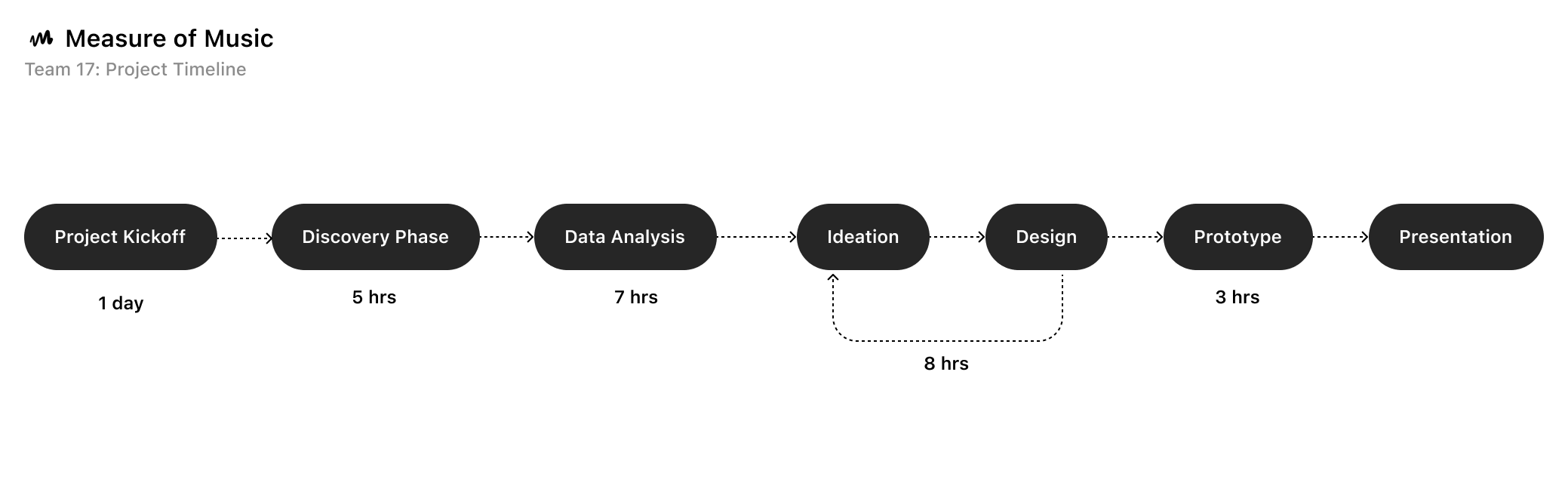
Responsibilities
Gathering context
To better understand the problem, I explored existing data and research, conducted a competitive analysis, and researched evidence-based best practices.
Designing
I used Figma and created a component library to create the designs for the artist and fan experience. I consistently shared my work with my team to gain feedback and test the designs.
Takeaways
The power of storyteling
Even though our project didn't win in the hackathon, we are happy to report that the judges gave us positive feedback on our work and presentation. During our pitch, we made sure to showcase our process in an engaging way through our slides, taking the judges on a journey from the problem to our solution. This approach helped us present our project effectively.
Overcommunicate
Because this project was entirely virtual, it was easy for us to mistakenly work in a silo. So, my team and I had to figure out the best way to communicate with each. We scheduled check-ins throughout the days through Slack and Google Meet to update each other on what we have done, what we were blocked on, and what we needed help with.
Next Steps
Conduct user interviews and usability tests
Due to our time constraint, my team and I could not conduct any in-depth interviews and run usability tests to validate our solution. Through one-on-one interviews with musicians and fans, we aim to uncover their difficulties connecting. Simultaneously, usability tests will provide insights their engagement preferences, challenges and goals.
Dive Deeper into Data Analysis of Artist Case Study, Wallice
In order to gain a better understanding of how the platform is working, we will review the data on how Wallice's interactions are going, how engaged their fans are, and how much of an impact exclusive content is having. By doing this, we can figure out what factors contributed to increased engagement. We'll also be looking at user feedback from Wallice's fan community, which will give us a more complete picture. Comparing this data to general trends on the platform will give us unique insights that can be used to make improvements.
Use Demographic Info on Fan Tiers for Engagement Recommendations
We plan to use the demographic information gathered from different fan tiers to analyze user profiles and preferences. Our goal is to identify patterns in engagement preferences, such as preferred merchandise types, interaction channels, and desired exclusive content. By doing so, we can provide personalized recommendations for each fan tier. These recommendations may include tailored merchandise suggestions, exclusive ticket pre-sales, and customized interactions with artists. Additionally, we will implement dynamic features that will continuously adapt to our users' engagement with the platform.